
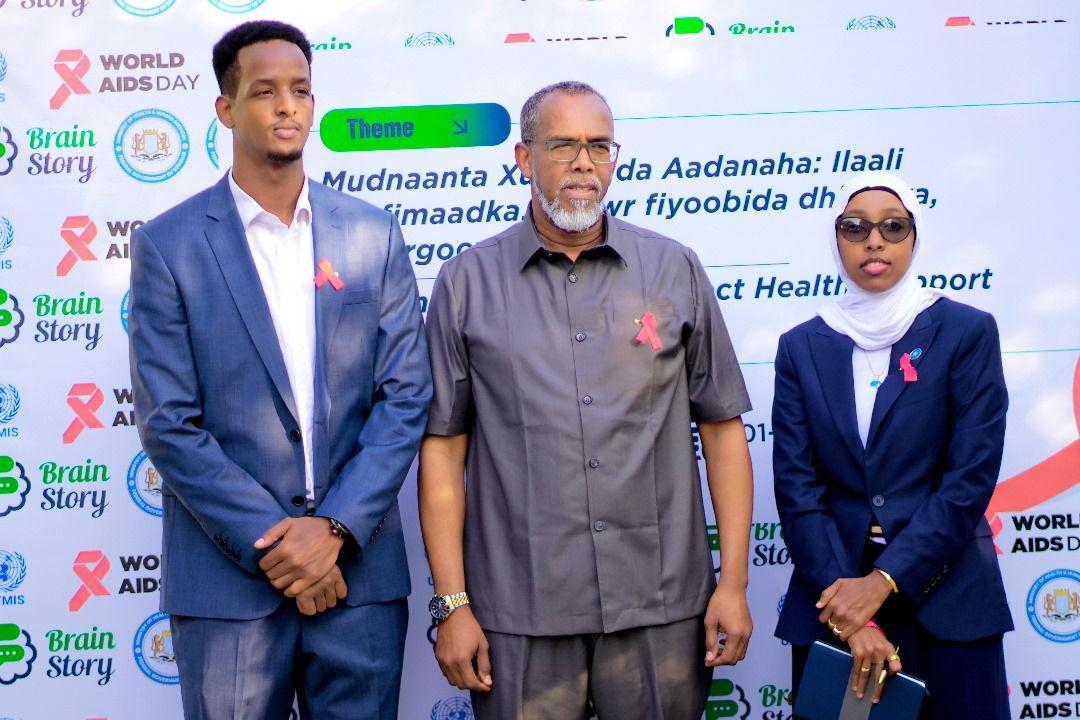
World AIDS
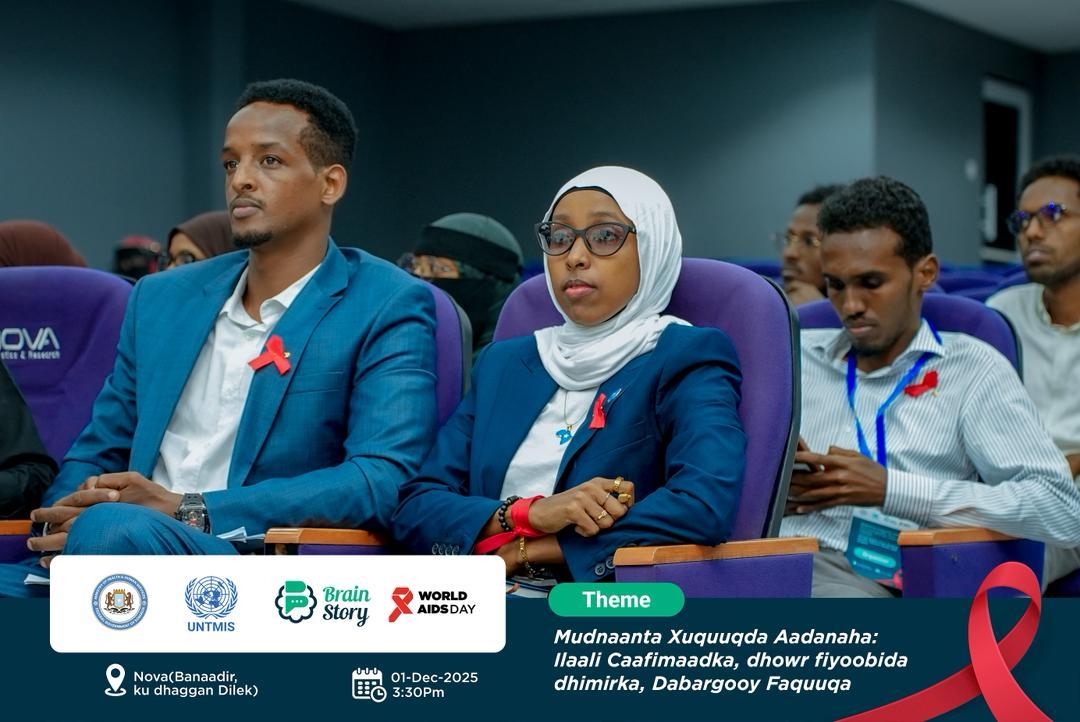
This report summarizes the proceedings, discussions, and outcomes of the awareness workshop for health professionals and other stakeholders
Brain Story
Author
This report summarizes the proceedings, discussions, and outcomes of the awareness workshop for health professionals and other stakeholders on the rights of persons with HIV/AIDS held on December 1, 2025, to commemorate World AIDS Day. The workshop successfully brought together health professionals and key stakeholders to address the critical issue of stigma and discrimination faced by PLHIV, particularly in healthcare and social settings. Key discussions focused on ethical obligations, national policies, and human rights principles. The main outcomes include a renewed commitment from participants to uphold patient confidentiality and non-discrimination, leading to the development of specific recommendations for policy review and continued training.
The annual observance of World AIDS Day on December 1st is an opportunity to unite people in the fight against HIV, show support for those living with HIV, and remember those who have died from AIDS-related illnesses. The theme for this year's celebration emphasized "Equity and Rights" to address the persistent barriers faced by PLHIV.
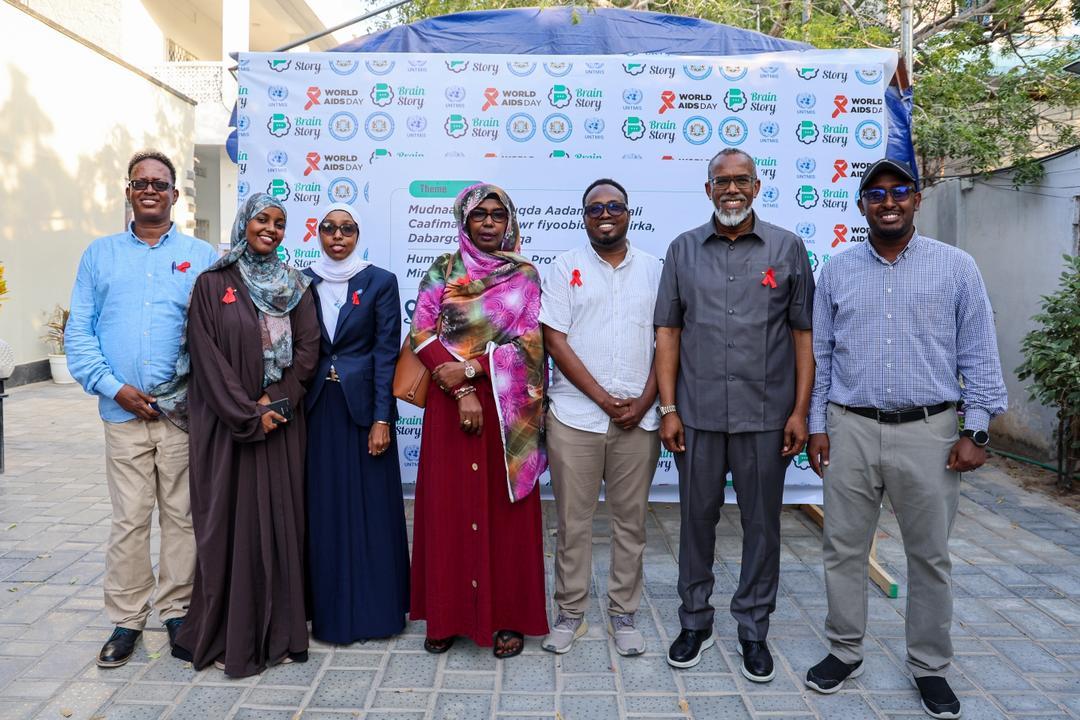
The workshop brought together 94 participants, including hospital administrators, doctors, nurses, university students, government officials, CSOs, and representatives from WHO and UNICEF. Importantly, the event ensured inclusivity by providing full-time sign-language interpretation, enabling persons with disabilities to participate fully. Youth were at the center of the program, with 61 young participants actively shaping discussions on prevention, stigma reduction, and resilience. This deliberate prioritization of youth voices underscored the sustainability of the initiative, as it empowered the next generation to lead future HIV and mental health advocacy.
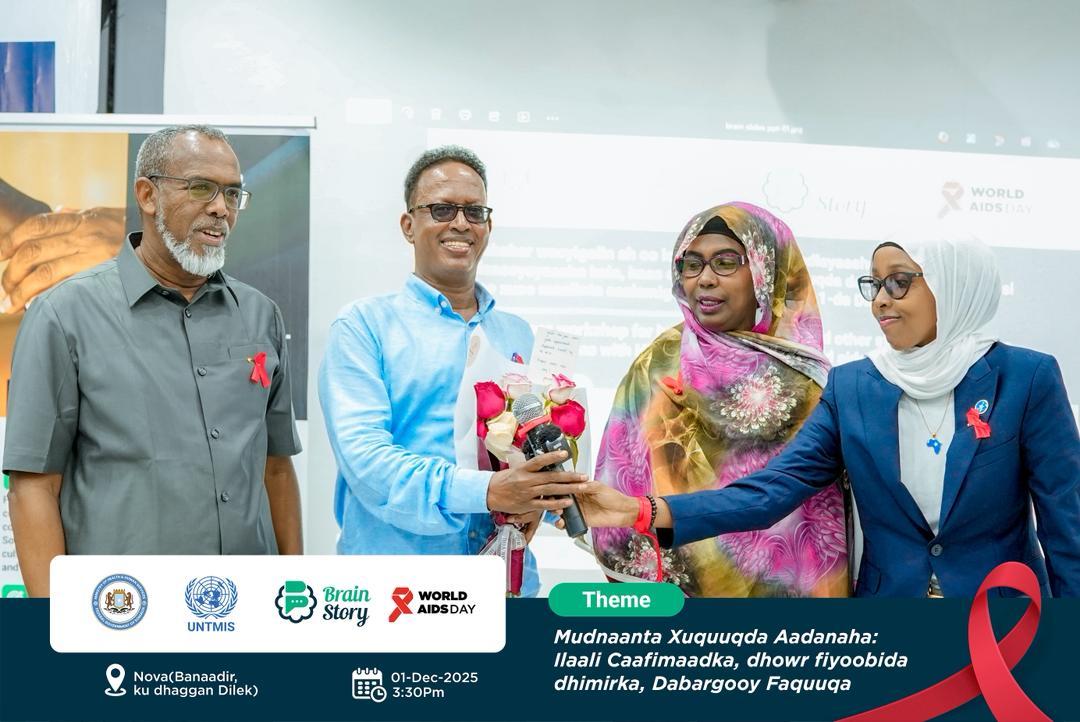
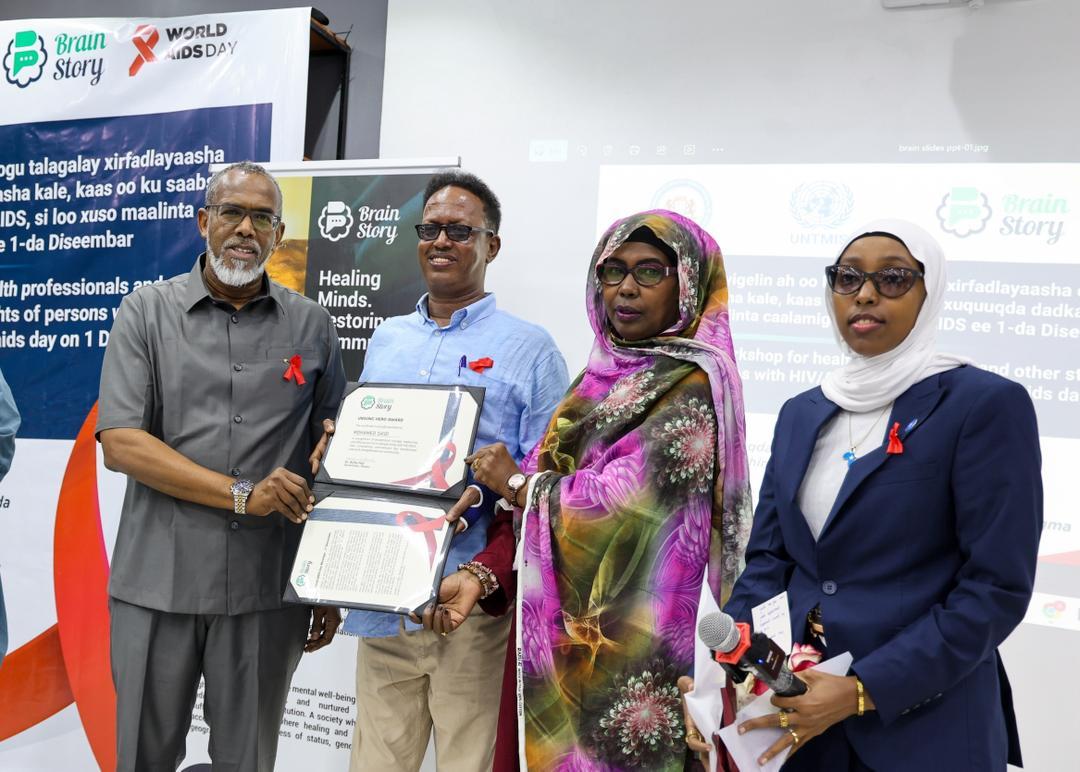
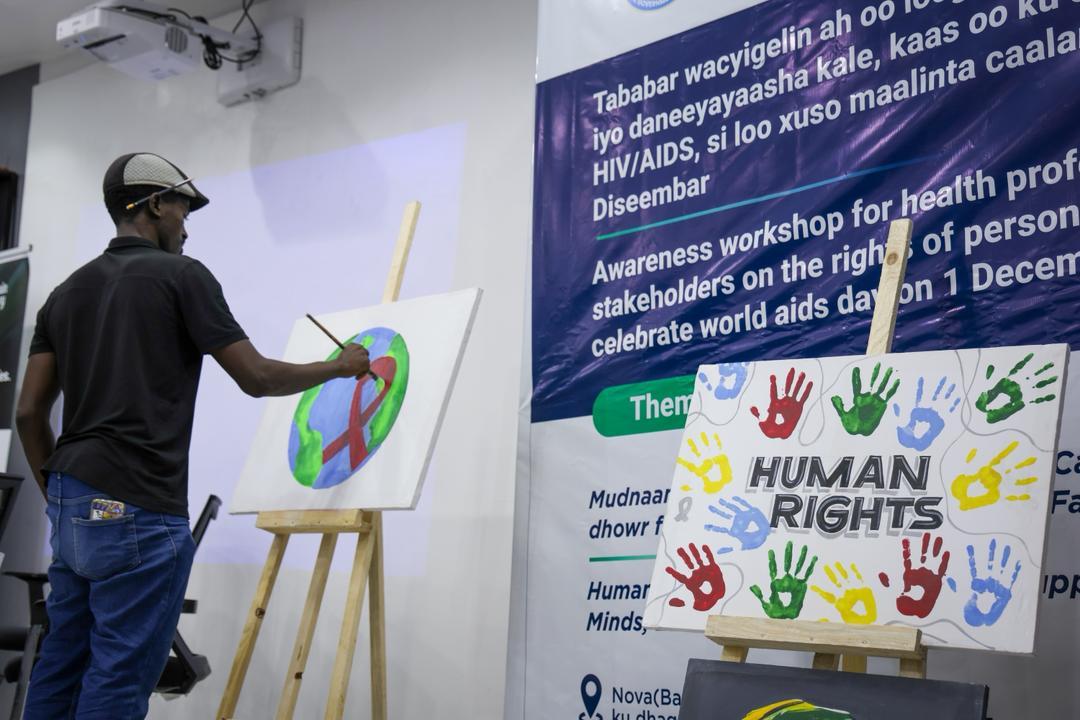
The recognition of long-time HIV advocate Mohamed Sacid, who has lived with HIV for over 25 years, symbolized the dignity and resilience at the heart of the campaign. His story, alongside artistic performances and youth-led panels, transformed the workshop into a space of empathy, courage, and collective commitment.
This workshop was organized with the goal of tackling the challenge of discrimination head-on, focusing on educating those in positions of influence healthcare providers and policymakers, about their professional and ethical duties to protect the fundamental human rights of PLHIV. Every December 1st is World’s AIDS Day an opportunity each year for public and private partners to spread awareness about the status of the pandemic and encourage progress in HIV/AIDS prevention, treatment and care around the world. It has become one of the most widely recognized international health days and a key opportunity to raise awareness, commemorate those who have died, and celebrate victoriessuch as increased access to treatment and prevention services.
The event aimed to achieve the following specific objectives:
To increase knowledge and awareness among health professionals and stakeholders regarding the national and international legal frameworks protecting the rights of PLHIV.
To facilitate open discussion and reflection on current practices that may contribute to stigma and discrimination within healthcare facilities.
To identify gaps in policy and practice that impede the full realization of the rights to health, privacy, and non-discrimination for PLHIV.
To generate actionable recommendations for strengthening human rights-based approaches to HIV prevention, treatment, and care.
The workshop utilized a highly interactive methodology, combining expert presentations with facilitated group discussions, case study analysis, and a dedicated plenary session for Q and A and commitment pledges. This approach ensured active engagement and practical application of the rights-based principles discussed.
Details of the participants
A total of 53 male and 41 female participants attended the workshop, representing diverse sectors critical to the HIV response; Hospital Administrators, Doctors, Nurses, and Clinical Staff, University students, Ministry of Health and some other Government Officials. Representatives from Local Civil Society Organizations (CSOs), UNICEF, WHO and PLHIV Advocates, Disability groups(members of Hearing-impaired, Physically-impaired community), representatives of other community members including Youth and Elders.
Ahead of World AIDS Day, Brain Story conducted a questionnaire designed to assess public perceptions and knowledge about HIV. The survey was administered to health workers across some hospitals in Mogadishu, members of the wider community, and people living with HIV (PLHIV).
Out of 100 questionnaires distributed, 32 responses were received directly from PLHIV, providing invaluable insights into lived experiences and stigma. The remaining responses are in process, and once completed, a full report and scale-up analysis will be shared with partners and stakeholders.
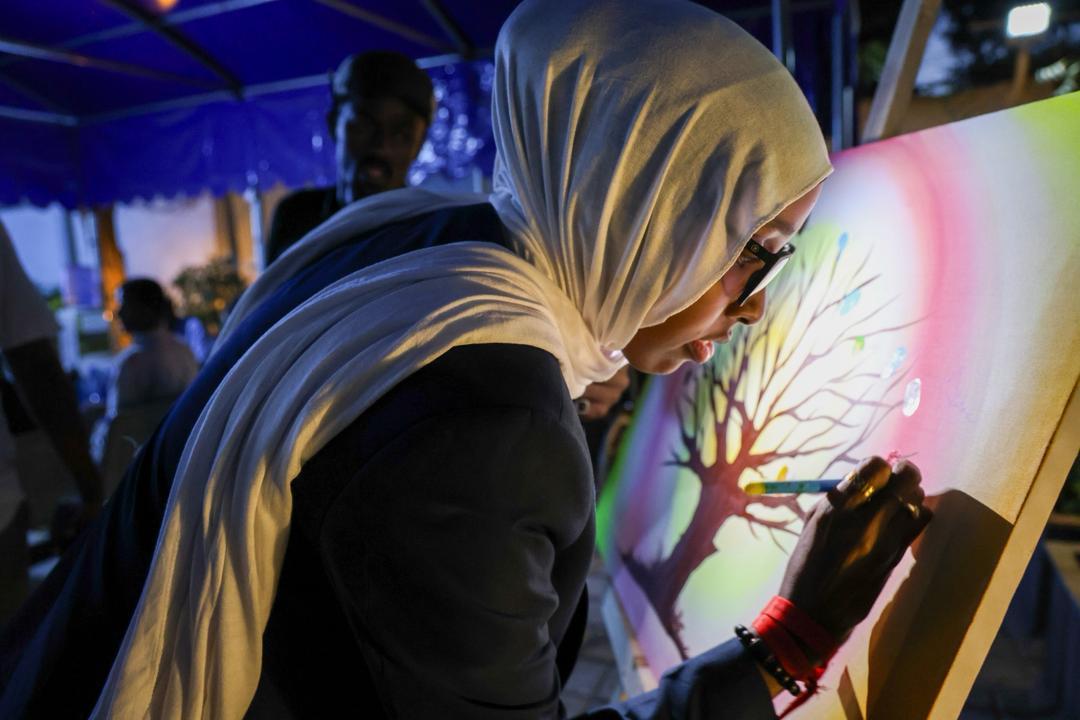
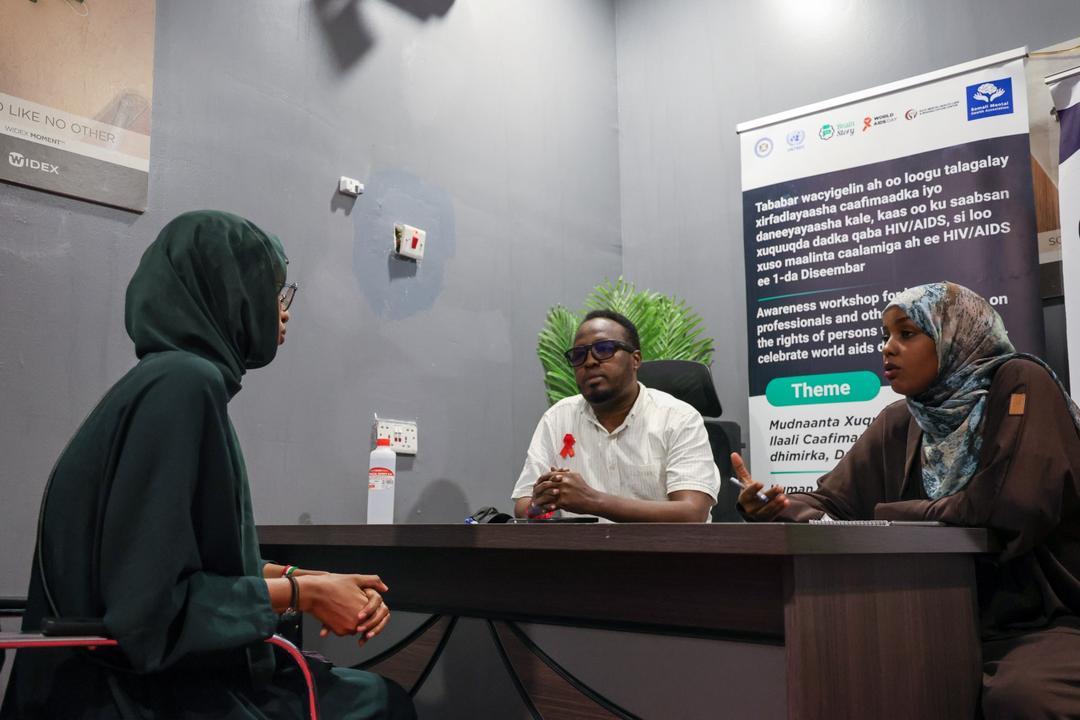
To ensure professional presentation, reinforce advocacy messages, and provide participants with practical tools during the event including;
Event Agenda, detailed program agenda outlining the sequence of activities, opening remarks, panel discussions, testimonies from PLHIV, youth performances, and closing reflections with professionally formatted with logos of Brain Story Organization, Ministry of Health, and partner agency; “UNTMIS”.
Informational brochures highlighting the theme of World AIDS Day, key statistics on HIV/AIDS in Somalia, mental health linkages, and available services at local clinics.
Designed Somali translation information with trauma-informed messaging, inclusive visuals, and rights-based language. 250 copies printed and disseminated at the Ministry of Health, clinics (including HIV department), schools, and community centers, universities, and youth hubs.
Fliers, short, impactful messages emphasizing stigma reduction, dignity, and solidarity. Included event details, slogans, and helpline contacts. Symbolic red ribbon imagery, adapted for audiences. 150 copies circulated in event hall.
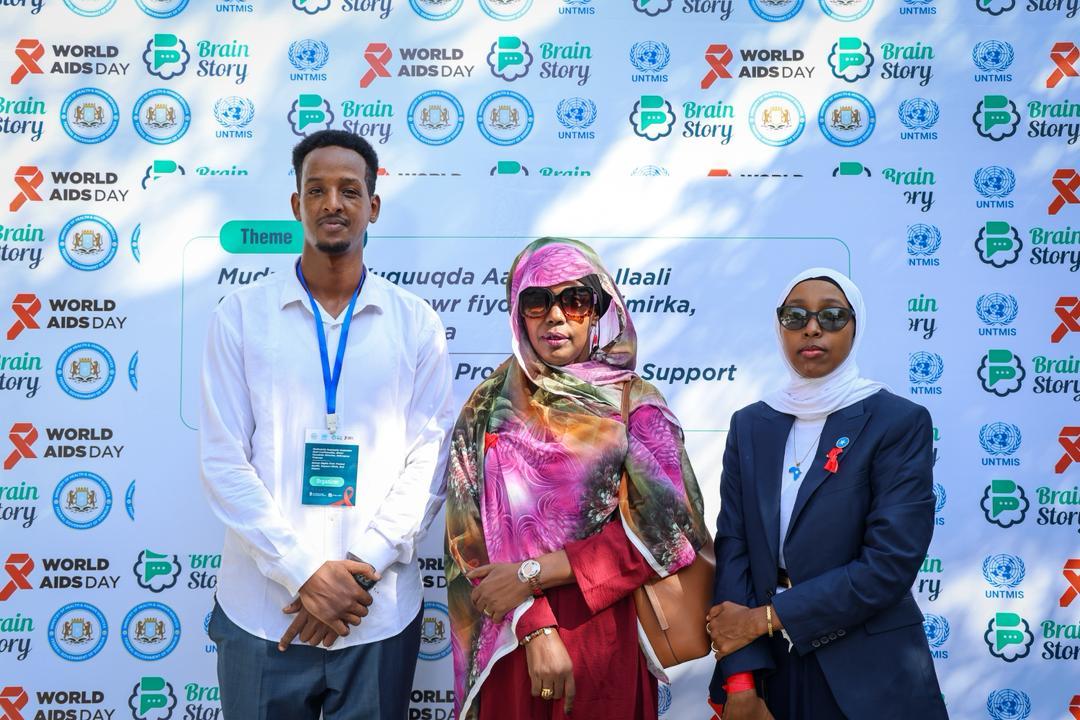
Banners and posters displayed at the venue, reinforcing the theme Human Rights First: “Protect health, support minds, End Stigma”
Pens and note-taking materials .
Knowledge management:
Several lessons emerged that strengthen the sustainability of this initiative. First, integrating mental health into HIV programming significantly increases community engagement and relevance. Second, disability inclusion is not optional but essential for building trust and equity. Third, youth-led storytelling proved more effective in reducing stigma than technical presentations alone, highlighting the importance of centering lived experiences.
The event achieved significant outcomes. Participants reported improved understanding of ethical obligations, confidentiality, and rights-based healthcare practices. Testimonies from people living with HIV (PLHIV) created powerful shifts in perception, particularly among youth, who expressed that hearing directly from survivors challenged their biases and motivated them to act against stigma.
Finally, multi-sector collaboration involving health, human rights, and disability organizations enriched the discussions and created pathways for long-term partnerships.
Human interest stories
Halima was a mother of three, living in Mogadishu. She worked hard to provide for her children, balancing her job with the endless responsibilities of raising them. Life was never easy, but she carried herself with quiet strength. One day, after a long period of unexplained illness, Halima received the diagnosis, “HIV/AIDS”. It was a moment that changed everything. She had hoped that with treatment and care, she could continue to live a full life, but the hardest battle was not the virus, it was the stigma.
When Halima revealed her status to her family, the community’s reaction was swift and cruel, her children were taken away by relatives who believed she was “unfit” to raise them, her family threw her out, refusing to let her stay in their home and her workplace dismissed her, claiming she was a “risk” to others. Suddenly, Halima found herself wandering the streets of Mogadishu, with no roof over her head, no food to eat, and no one willing to stand beside her.
During the nights, Halima sleeps in unknown places, sometimes under shop verandas, sometimes in abandoned buildings, hunger gnawed at her, but the pain of rejection was sharper! She often thought of her children, wondering if they missed her, if they asked about her.
The whispers of neighbors followed her everywhere: “She is cursed.” “Stay away from her.” “She brought shame.”!!
Yet, even in the darkest nights, Halima held onto something, “her dignity”. She reminded herself that her illness did not define her worth, she was still a mother, a woman, a human being deserving of love and respect. She began to meet others living with HIV, people who understood her pain. In their company, she found solidarity. Together, they shared food when they had it, stories when they had none, and hope when everything else was gone.
Halima’s story is not just about suffering, it is about resilience. Despite being abandoned, she became a quiet advocate. She spoke to women in hidden corners of Mogadishu, telling them:“You are not alone, HIV does not erase your humanity, and We must stand together against stigma.”
Her voice, once silenced by rejection, became a seed of change. Halima’s journey shows the devastating impact of stigma, but also the possibility of healing through community, compassion, and courage. Her life reminds us that no one should be left without shelter, food, or dignity simply because of their health status.
Finaly, this story can be adapted into advocacy materials, campaign visuals, or even spoken-word performances to highlight the human cost of stigma and the urgent need for compassion.
We initiated a series of podcasts aimed at strengthening psychosocial support, reducing stigma, and amplifying the voices of people living with HIV (PLHIV). These podcasts are part of our broader advocacy efforts to integrate mental health, human rights, and community engagement for world AIDS-Day in Somalia.
Two podcasts have been completed and are undergoing final editing;
Podcast-1. Psychosocial Support for the community and PLHIV, focusing on mental health, resilience, and coping strategies for individuals living with HIV and provides practical guidance and emotional support to promote dignity and wellbeing.
Targeting the wider community to raise awareness about stigma and discrimination, encourages inclusive attitudes and collective responsibility in supporting PLHIV.
Podcast-2.Testimony from a Person Living with HIV which features a personal story to humanize the experience of living with HIV, highlights challenges, resilience, and the importance of solidarity.
Accessibility Measures; Subtitles are being added to ensure inclusivity for diverse audiences, sign language interpretation, and disseminate podcasts through community channels, social media, and advocacy networks.
Two WhatsApp groups were created one for health professionals and another for youth advocates, ensuring continuous engagement and knowledge-sharing. This approach represents a scalable model for future campaigns, where digital platforms can extend the reach of awareness efforts and maintain momentum long after the event concludes.
Lessons Learnt/Good Practices/Intranet Submission:
The World AIDS Day initiative provided a wealth of lessons that demonstrate how youth-led, community-driven approaches can transform HIV awareness and human rights programming in Somalia. One of the most important lessons was the value of deep pre-engagement with communities. Prior to the workshop, Brain Story conducted 100 questionnaires across four hospitals and 40 questionnaires directly with PLHIV. This data collection not only informed the event design but also revealed critical gaps in stigma reduction, confidentiality, and access to services. By grounding the workshop in evidence, we ensured that discussions were relevant and responsive to real needs.
We also learned that safe spaces and healing circles are essential for dignity and resilience. Spending a full day with 40 PLHIV in a safe space circle allowed participants to share their stories, challenges, and experiences of discrimination. The emotional impact was profound, with Brain Story colleagues moved to tears as they witnessed the courage and vulnerability of participants. The healing circle created that afternoon became a turning point, offering PLHIV confidence, solidarity, and hope. This model will be replicated in future contexts, with Brain Story committing to provide ongoing MHPSS support and healing circles for different PLHIV communities.
Another lesson was the effectiveness of multi-modal communication and dissemination. Beyond the workshop itself, Brain Story produced two podcasts, one featuring a PLHIV advocate and another with a mental health professional to extend awareness into digital spaces. These podcasts, combined with strong social media engagement, amplified the reach of the campaign and ensured that information was accessible to youth and wider audiences. This innovative use of digital platforms demonstrates how youth-led organizations can leverage technology to scale impact even with limited resources.
The provision of 100 HIV tests and 150 self-tests was another critical factor. By offering self-tests to those uncomfortable with public testing, Brain Story reduced barriers to early detection and empowered individuals to take control of their health privately and safely. This approach is highly replicable and should be integrated into future HIV programming across Somalia and similar contexts.
Finally, the initiative reaffirmed that youth-led organizations are uniquely positioned to resonate with young people and communities. Brain Story’s close connection with the community, combined with creativity and authenticity, made it easier to build trust and deliver messages effectively. Despite operating with a very small budget, the organization maximized its impact through innovation, social media presence, and genuine community engagement. This demonstrates that sustainability is not only about resources but also about approach: when youth lead with creativity and empathy, they can achieve outstanding results even under resource constraints.
Challenges and recommendations:
Somalia’s HIV/AIDS response continues to face profound challenges that mirror the global situation of the 1990s. Despite the progress made through awareness campaigns such as the World AIDS Day workshop, systemic barriers remain entrenched. One of the most pressing issues is the severe funding shortfall. Recent reductions in international HIV assistance have disrupted prevention and community services, leaving Somalia particularly vulnerable given its high dependency on external financing. The USAID funding freeze alone resulted in the closure of more than a hundred health facilities nationwide, underscoring how fragile the system remains without sustained investment.
Without reliable financing, even innovative youth-led initiatives risk collapse before they can achieve long-term impact.
Another challenge is the low uptake and adherence to antiretroviral therapy. Stigma, fear of disclosure, and weak health system support continue to undermine treatment outcomes. Many young people avoid testing altogether due to fear of discrimination, while those living with HIV often face breaches of confidentiality in clinical settings. This perpetuates silence and invisibility, leaving Somalia far behind global 95–95–95 targets. Stigma and discrimination remain pervasive, with people living with HIV marginalized in healthcare, employment, and community life. Women and high-risk groups such as people who inject drugs face compounded vulnerabilities, and Somalia lacks strong enforcement mechanisms to protect them from rights violations.
Mental health integration is another critical gap. While the workshop highlighted the importance of linking HIV and mental health, Somalia has almost no referral pathways or trained professionals to provide psychosocial support. This leaves people living with HIV isolated and undermines resilience. Private sector engagement is also weak. Few private hospitals offer free HIV testing, and many lack protocols for confidentiality and rights-based care. Without private sector involvement, access remains limited to overstretched public facilities. Finally, coordination challenges persist. Multiple actors government, NGOs, and UN agencies often operate in silos, leading to duplication and fragmented services.
To address these challenges, several recommendations emerge. Sustainable financing must be secured by diversifying funding sources, advocating for increased domestic budget allocation, and building consortiums that integrate HIV with broader health and humanitarian programs. Youth-led anti-stigma campaigns should be expanded, leveraging storytelling, digital platforms, and survivor testimonies to shift perceptions and normalize testing. ART adherence support needs to be strengthened through community-based peer networks, confidentiality safeguards, and integration of psychosocial services. Anti-discrimination policies must be enforced by embedding rights-based training into healthcare curricula and establishing accountability mechanisms for violations.
Mental health should be integrated into HIV programming, with healthcare workers trained to provide basic counseling and referral pathways established for specialized services. The private sector must be engaged through incentives to provide free testing and adopt rights-based protocols. Finally, coordination should be improved by institutionalizing regular consultation with relevant government ministries, ensuring that workplans reflect local priorities and governance mandates.